History
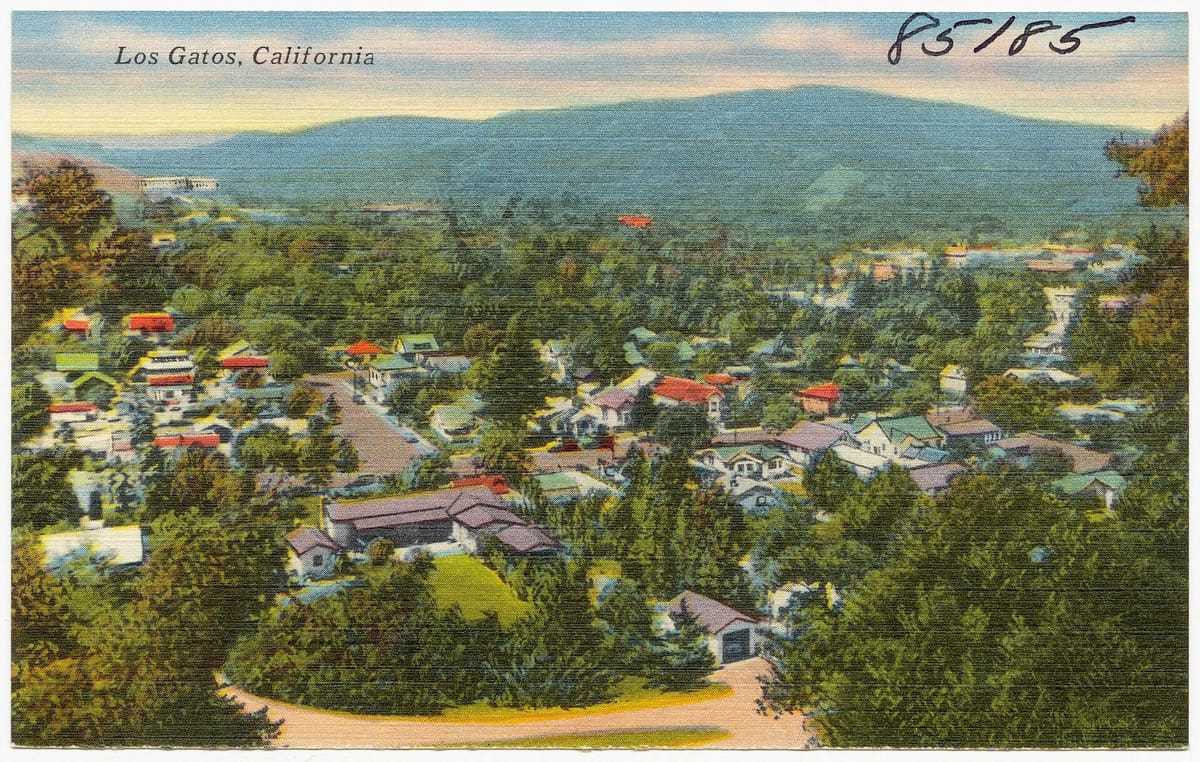
Los Gatos sits where Los Gatos Creek leaves the Santa Cruz Mountains for the Santa Clara Valley. It took its name from a land grant, grew up around a stone flour mill, boomed when the railroad came, and spent half a century as an orchard and resort town before it became a suburb of Silicon Valley.

A short history of Los Gatos
Los Gatos sits where Los Gatos Creek leaves the Santa Cruz Mountains for the Santa Clara Valley. It took its name from a land grant, grew up around a stone flour mill, boomed when the railroad came, and spent half a century as an orchard and resort town before it became a suburb of Silicon Valley. This page tells that story in short, with a link to the source for every claim. For the full texts of the old books, see the reading list.
The first people and the corner of the cats
The first people of the area were the Ohlone [1]. In 1840 Governor Juan Alvarado granted the 6,631-acre Rancho Rinconada de los Gatos to two brothers-in-law, José María Hernández and Sebastián Fabián Peralta [2]. The name means “the corner of the cats”: the cats were the cougars and bobcats of the hills, and the corner was the narrowing gap between El Sereno and El Sombroso mountains [1] [2]. Hernández and Peralta built an adobe house on what is now a lawn of Vasona Lake County Park, the first building in the area [19]. Early settlers found wildcats “numerous in the adjacent hills,” an 1888 county history says, and that gave the town its name [4].
Forbes Mill, 1850s
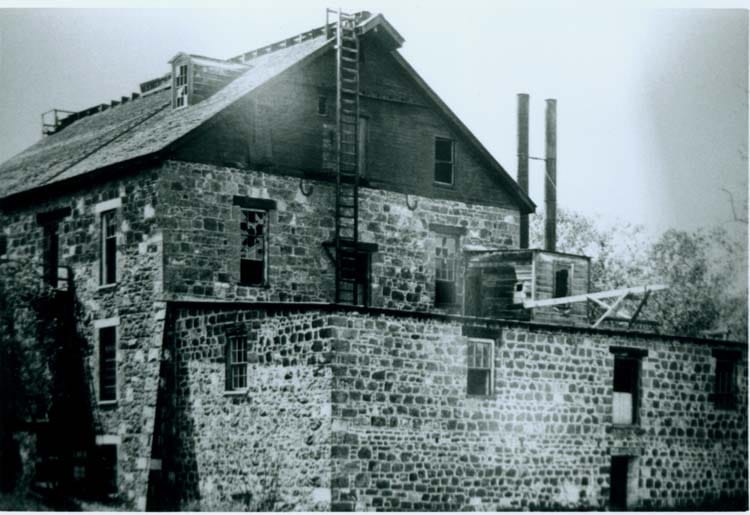
James Alexander Forbes, a Scot who had served as British vice-consul in San Francisco, bought about 2,000 acres along the creek and built a stone flour mill, the Santa Rosa Flour Mill, which began grinding on December 1, 1855 [3]. Its machinery had come from New York around Cape Horn, the creek ran short in summer, flour prices fell after the Gold Rush, and Forbes went bankrupt; the mill was sold in 1857 [3]. William H. Rogers bought it in 1866, raised the water head and made it pay, and from 1869 it was the Los Gatos Manufacturing Company [3]. The settlement around the mill was called Forbes Mill, then Forbestown, and finally Los Gatos [3]. An 1881 county history found only the mill and two shanties there in 1859; a store and lumber yard followed about 1863, and Henry D. McCobb became the first postmaster on December 8, 1864 [5].
The railroad and the orchard boom, 1877-1887
The building of the Santa Cruz Turnpike put Los Gatos on the road between San Jose and Santa Cruz, and the town became a stopping place for teamsters from the mountain lumber camps [4]. But its “real prosperity,” the 1888 history says, dates from 1877, when the narrow-gauge South Pacific Coast Railroad arrived [4]. Visitors saw oranges, lemons and figs in the gardens and decided they were in the “warm belt”; town lots soon sold by the front foot for what land had once fetched by the acre, and the reddish foothill soil proved ideal for orchards [4]. The line over the mountains to Santa Cruz took two years and eight tunnels and opened in 1880 [6]. In 1881 John W. Lyndon divided the Broadway tract into 48 lots, and Broadway became the town’s first residential street [7]. W. S. Walker started the Los Gatos Weekly News in the early 1880s after a hotel keeper talked him out of Saratoga [22]. In 1887 voters chose to incorporate, and the new town had about fifteen hundred people [4].
Gem City of the Foothills, 1887-1940
Almond Grove, a 40-acre almond orchard, became the first and largest subdivision after incorporation, and one of its developers, John Bean, built the spray pump that grew into the Food Machinery Corporation [7]. Fires in 1891 and 1901 burned much of Main Street, and after the second, which destroyed 60 buildings, business moved north onto Santa Cruz Avenue [8]. John Lyndon’s Hotel Lyndon opened across from the depot on June 1, 1899, and for sixty years almost anything of note in town seemed to happen there [9]. In 1907 the Board of Trade boasted of three thousand people, seven churches, no saloons, a cannery employing about five hundred, and dried and canned fruit shipped by the million pounds [10]. By 1922 a county historian called Los Gatos the “Gem City of the Foothills,” with prune ranches on the hills, a new state highway over the mountains and an outdoor pageant, “The Californian,” that drew crowds in 1920 [11].
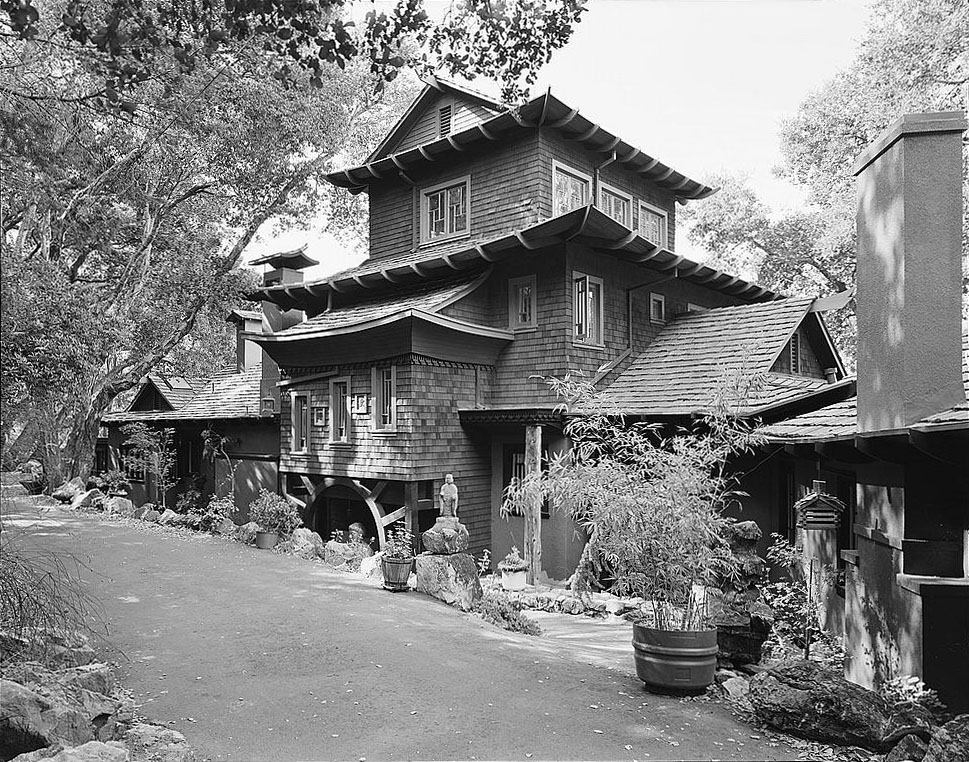

The Novitiate and its vineyards
In 1886 the Jesuits bought a hillside above the town to build a novitiate, where young men trained for the order, and paid for it by making sacramental wine; the first harvest was on October 11, 1888 [12]. Because the winery kept making altar wine through Prohibition, it is counted as the fourth-oldest continuously operating winery in California [13]. The Jesuits made wine there for 98 years, until 1986, and in 1997 Diana and Rob Jensen reopened the cellars as Testarossa [12].
Writers, artists and a pair of cats
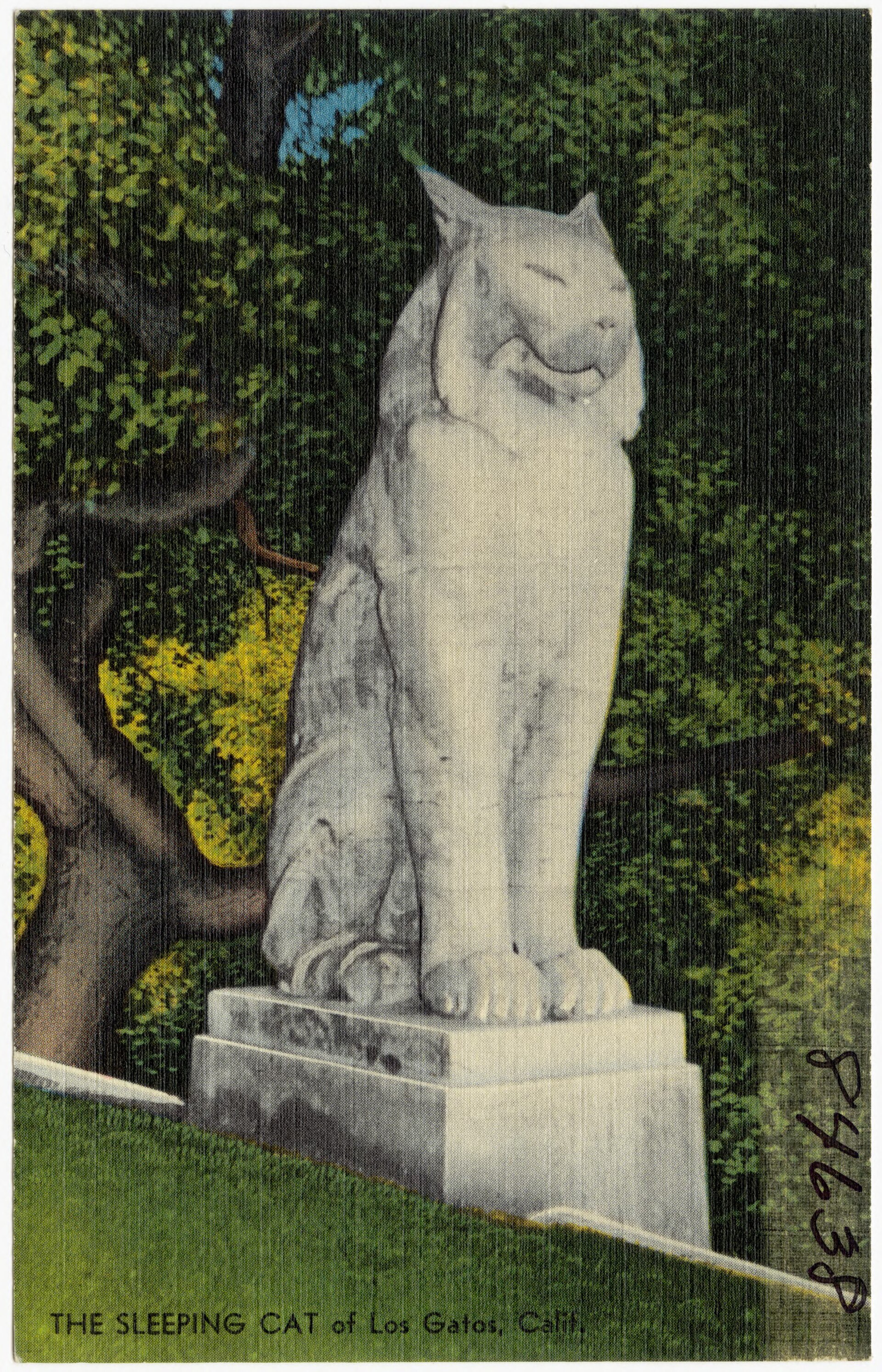
From the 1920s the town had a name as an artists’ colony [1]. Charles Erskine Scott Wood and the poet Sara Bard Field lived at an estate called “The Cats,” whose gate is guarded by two white cat sculptures by Robert Paine; the cats now appear on the town seal [15]. The violinist Yehudi Menuhin lived in Los Gatos as a boy, and the sisters Olivia de Havilland and Joan Fontaine went to Los Gatos High School [1]. John Steinbeck wrote The Grapes of Wrath and Of Mice and Men in a house on Greenwood Lane, in what is now Monte Sereno [14], and the Beat figure Neal Cassady lived nearby in the 1950s [1].
Rails out, reservoirs in
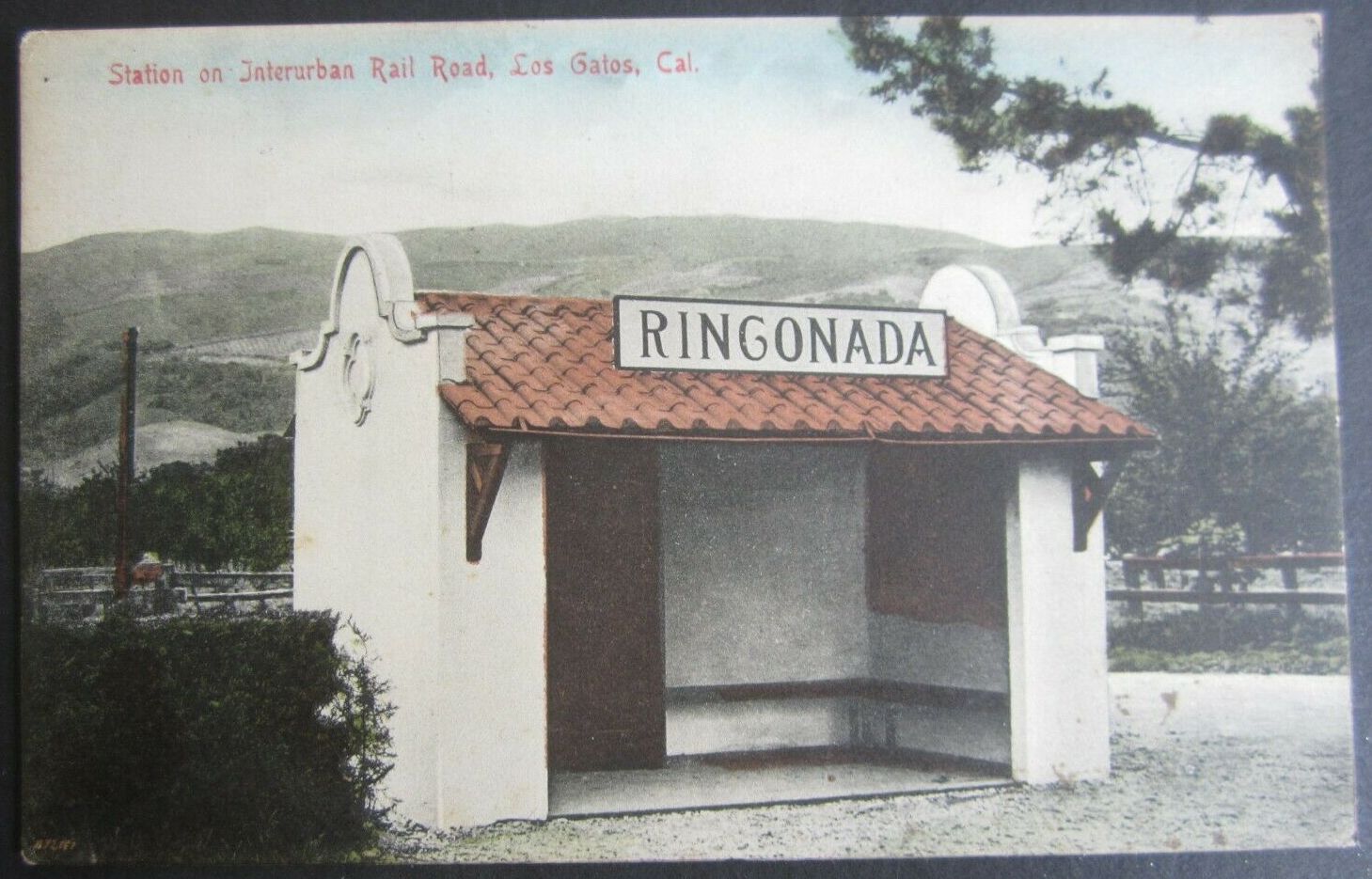
The last Southern Pacific passenger train to Santa Cruz left Los Gatos on February 26, 1940, and commuter trains stopped coming downtown in 1959; the old station site is now Town Plaza and the post office [1]. Vasona Dam was finished in 1934 [19]. In 1952 the Lenihan Dam closed the canyon above town, and Lexington Reservoir covered the old sawmill and stage towns of Lexington and Alma; Highway 17 was moved, and in dry years the old roadbed and foundations still show [16] [21]. Lexington had begun as a sawmill in 1848 and was named in 1860 for Lexington, Kentucky [17]. Up the old mountain road, “Father” William Riker founded Holy City in 1919 [20]. Billy Jones, a Southern Pacific engineer, ran his little Wildcat Railroad on his prune ranch for neighborhood children, and after his death in 1968 residents moved it to Oak Meadow Park, where it opened in 1970 [18].
Suburb and Silicon Valley
Along with much of the Santa Clara Valley, Los Gatos became a suburb of San Jose from the 1950s and was mostly built out by the 1980s [1]. The 1989 Loma Prieta earthquake destroyed or badly damaged a number of brick buildings downtown, which was quickly rebuilt [1]. The 9.7-mile Los Gatos Creek Trail now follows the creek from Lexington Reservoir, past Forbes Mill and through Vasona, to San Jose, partly on the old railroad bed [23]. The town had 33,529 people at the 2020 census, and Netflix has its headquarters here [1].
Key dates
01
1840
The corner of the cats
Governor Juan Alvarado grants the Rancho Rinconada de los Gatos to José María Hernández and Sebastián Fabián Peralta. Source ↗
02
1855
Forbes Mill grinds
James Alexander Forbes’s stone mill on Los Gatos Creek grinds its first flour on 1 December. Source ↗
03
1864
A post office
Henry D. McCobb becomes the first postmaster on 8 December. Source ↗
04
1877
The railroad arrives
The narrow-gauge South Pacific Coast Railroad reaches Los Gatos, and the town’s boom begins. Source ↗
05
1880
Over the mountains
After two years and eight tunnels, the line opens through the Santa Cruz Mountains to Santa Cruz. Source ↗
06
1881
Broadway
John W. Lyndon divides the Broadway tract into 48 lots, laying out the town’s first residential street. Source ↗
07
1887
A town
Voters choose to incorporate, and the new town counts about fifteen hundred people. Source ↗
08
1888
The Novitiate harvest
Jesuit novices pick the first grapes on the hillside above town on 11 October. Source ↗
09
1899
The Hotel Lyndon
John Lyndon’s new hotel opens across from the depot on 1 June, with nearly the whole town at the celebration. Source ↗
10
1901
Fire on Main Street
A fire destroys 60 buildings, and business moves north onto Santa Cruz Avenue. Source ↗
11
1936
Steinbeck on Greenwood Lane
John and Carol Steinbeck move in; he writes The Grapes of Wrath there. Source ↗
12
1952
Lexington Reservoir
The Lenihan Dam is finished, and the old towns of Lexington and Alma disappear under the water. Source ↗
13
1970
The Wildcat Railroad moves to the park
Billy Jones’s little steam railroad reopens in Oak Meadow Park. Source ↗
14
1989
Loma Prieta
The earthquake damages downtown’s brick buildings, and the district is rebuilt. Source ↗
15
1991
A historic district
Downtown’s commercial core is listed on the National Register of Historic Places on 13 September. Source ↗
Sources
1. Los Gatos, California — Wikipedia
2. Rancho Rinconada de Los Gatos — Wikipedia
4. Pen Pictures from the Garden of the World (H. S. Foote, ed., 1888) — Internet Archive
5. History of Santa Clara County, California (J. P. Munro-Fraser, 1881) — Internet Archive
6. South Pacific Coast Railroad — Wikipedia
7. Historic Districts — Town of Los Gatos
8. Los Gatos Historic Commercial District — Wikipedia
9. Discover LOST Gatos: The long-lost Hotel Lyndon — Los Gatan, 2023
10. Souvenir of Los Gatos, California (Los Gatos Board of Trade, 1907) — Internet Archive
11. History of Santa Clara County, California (Eugene T. Sawyer, 1922) — Internet Archive
12. Blessing of the Grapes at Jesuits’ Historic Winery — Jesuits West, 2024
13. Testarossa Winery — Wikipedia
14. Monte Sereno, California — Wikipedia
15. Charles Erskine Scott Wood — Wikipedia
16. Lexington Reservoir — Wikipedia
17. Lexington, California — Wikipedia
18. Billy Jones (railroader) — Wikipedia
19. Vasona Lake County Park — Wikipedia
20. Holy City, California — Wikipedia
21. Los Gatos Creek (Santa Clara County) — Wikipedia
22. Between the Tides (W. S. Walker, 1885) — Internet Archive
Further reading
Pen Pictures from the Garden of the World, or Santa Clara County, California, H. S. Foote (editor) (1888) — public domain, free to read online
History of Santa Clara County, California, J. P. Munro-Fraser (1881) — public domain, free to read online
History of Santa Clara County, California, Eugene T. Sawyer (1922) — public domain, free to read online
Souvenir of Los Gatos, California, Los Gatos Board of Trade (1907) — public domain, free to read online
A Breeze from the Woods, W. C. Bartlett (1883) — public domain, free to read online
Between the Tides: Comprising Sketches, Tales and Poems, Including Hungry Land, W. S. Walker (1885) — public domain, free to read online
Biographical Sketch of James Clark Strong, James Clark Strong (1910)
The Perfect Kingdom, H. W. Fitch (1910)
Santa Clara County, Santa Clara County Board of Supervisors (1915)
Blossom Trolley Trip, Santa Clara County, Peninsular Railway Company (1910)
History of Los Gatos: Gem of the Foothills, George G. Bruntz (1971) — borrow it from the Internet Archive
Los Gatos (Images of America), Peggy Conaway (2004) — borrow it from the Internet Archive
Images of Rail: Railroads of Los Gatos, Edward Kelley, Peggy Conaway (2006) — borrow it from the Internet Archive
Legendary Locals of Los Gatos, Peggy Conaway Bergtold, Stephanie Ross Mathews (2014) — borrow it from the Internet Archive
Holy City: Riker’s Religious Roadside Attraction in the Santa Cruz Mountains, Betty Bagby Lewis (1992) — borrow it from the Internet Archive
Like Modern Edens: Winegrowing in Santa Clara Valley and Santa Cruz Mountains, 1798-1981, Charles L. Sullivan (1982) — borrow it from the Internet Archive
The Grapes of Wrath, John Steinbeck (1939) — borrow it from the Internet Archive